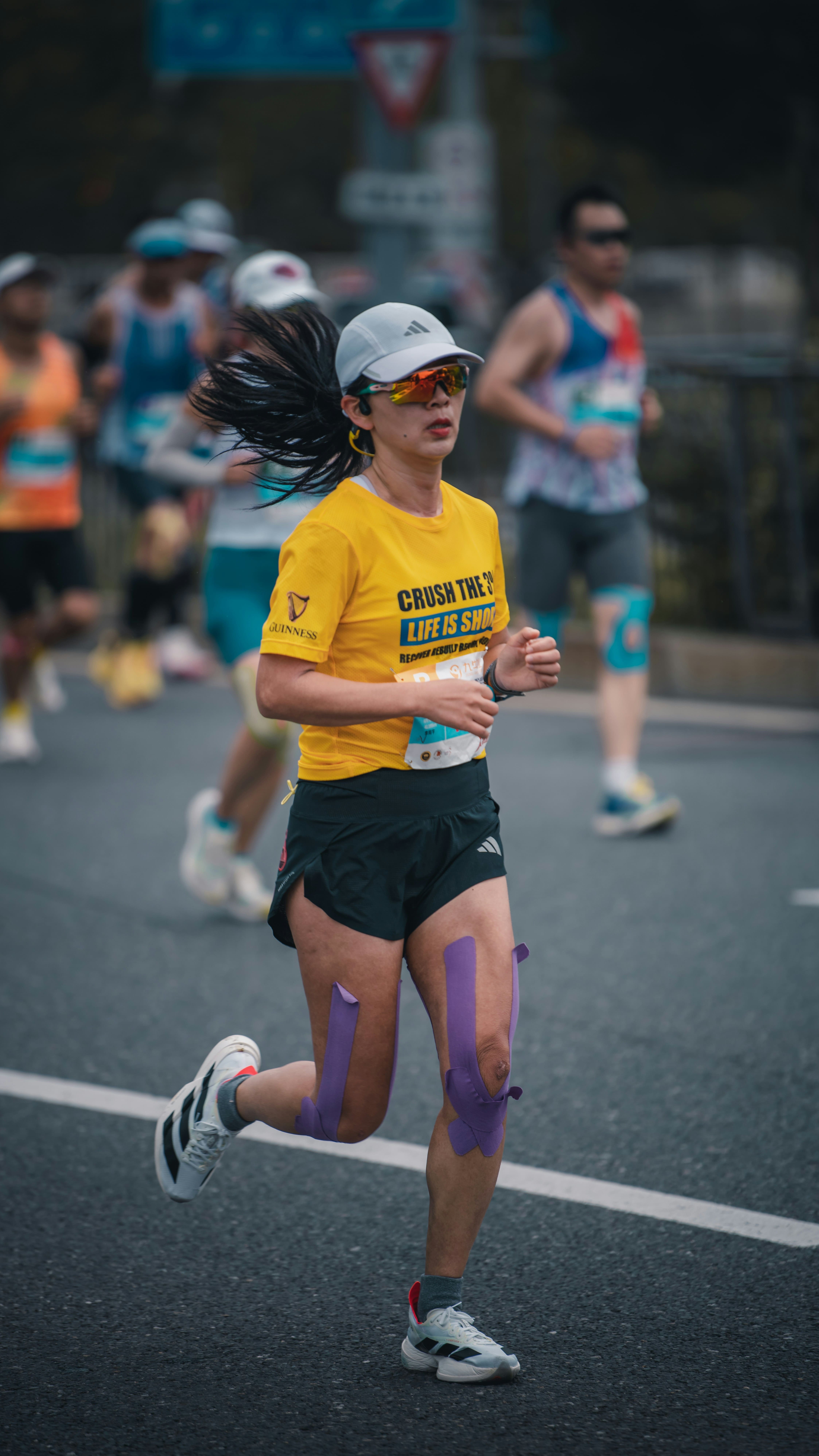
If you’ve started to feel that familiar ache around the front or outside of your knee when you run, you’re not alone. Runner’s knee is one of the most common issues we see across Belfast, Lisburn, Moira, and the wider Northern Ireland running community. It shows up during long runs, hills, speed sessions — or sometimes just a few minutes into an easy jog. The good news? Runner’s knee is very fixable once you understand why it’s happening and what your body needs to recover properly.
What is runner’s knee?
Runner’s knee usually refers to two problems:
Patellofemoral Pain Syndrome (PFPS) — pain around or behind the kneecap
IT Band Syndrome (ITBS) — pain on the outside of the knee
Both conditions come from the same place:
your knee is taking more load than it can currently handle.
Why runner’s knee happens
Most cases come down to a few key factors:
1. Weak hip control
If your glutes aren’t doing their job, your knee drifts inward when you land.
This increases pressure on the kneecap and IT band.
2. Sudden spike in training
New shoes. More miles. Faster sessions.
Your knee gets overloaded before it has time to adapt.
3. Low cadence
If your steps per minute are too low (below ~165–170), you land heavier and farther in front of your body — increasing knee stress.
4. Tight or overworked quads
This pulls on the kneecap and creates stiffness around the joint.
5. Weakness in the foot/ankle
Poor foot stability forces the knee to compensate.
Quick self-check (at home)
Ask yourself:
Pain during or after longer runs?
Twinge on steps or downhill?
Knee feels “achy” after sitting?
Pain returns quickly when you restart training?
If yes, you’re showing classic runner’s knee patterns.
What actually helps (first 7–10 days)
1. Reduce load — don’t stop running completely
Keep easy runs, reduce hills and speed work, and drop total mileage by 20–40% temporarily.
2. Increase cadence by 5–7%
This small tweak instantly reduces knee load.
3. Add simple strength exercises
Do these 3–4 times per week:
Side-lying hip raises
Slow, controlled step-downs
Single-leg RDL
Glute bridge variations
4. Keep moving — avoid total rest
Rest alone doesn’t fix the problem and often makes the return to running worse.
The Active Rehab approach (what actually fixes it for good)
At Active Rehab, we don’t guess. We assess:
Hip strength
Knee tracking
Running mechanics
Foot placement
Single-leg control
Load tolerance
Then we create a plan that includes:
Targeted hands-on treatment
Movement pattern correction
Personalised strength training
Running technique cues
Exercises delivered in the TrueCoach app
This approach doesn’t just calm the pain —
it stops it coming back when mileage increases.
Common mistakes runners make
Foam rolling the IT band only
Completely stopping running
Switching shoes hoping for a “quick fix”
Skipping strength training
Increasing mileage too early
When to book in
Speak to a therapist if:
Pain affects more than 2–3 runs
Pain returns when you increase your mileage
You have IT band pain that won’t ease
You’re preparing for a race and need fast guidance
Final thoughts
Runner’s knee doesn’t have to derail your training.
With the right plan, you can get back to pain-free running and build the strength to stay injury-free long term.
Need help fixing runner’s knee?
Book your initial consultation in Belfast or Lisburn today.


Let’s keep in touch.
Discover more about injury recovery and performance. Follow us on Instagram and Facebook for tips and success stories.
